
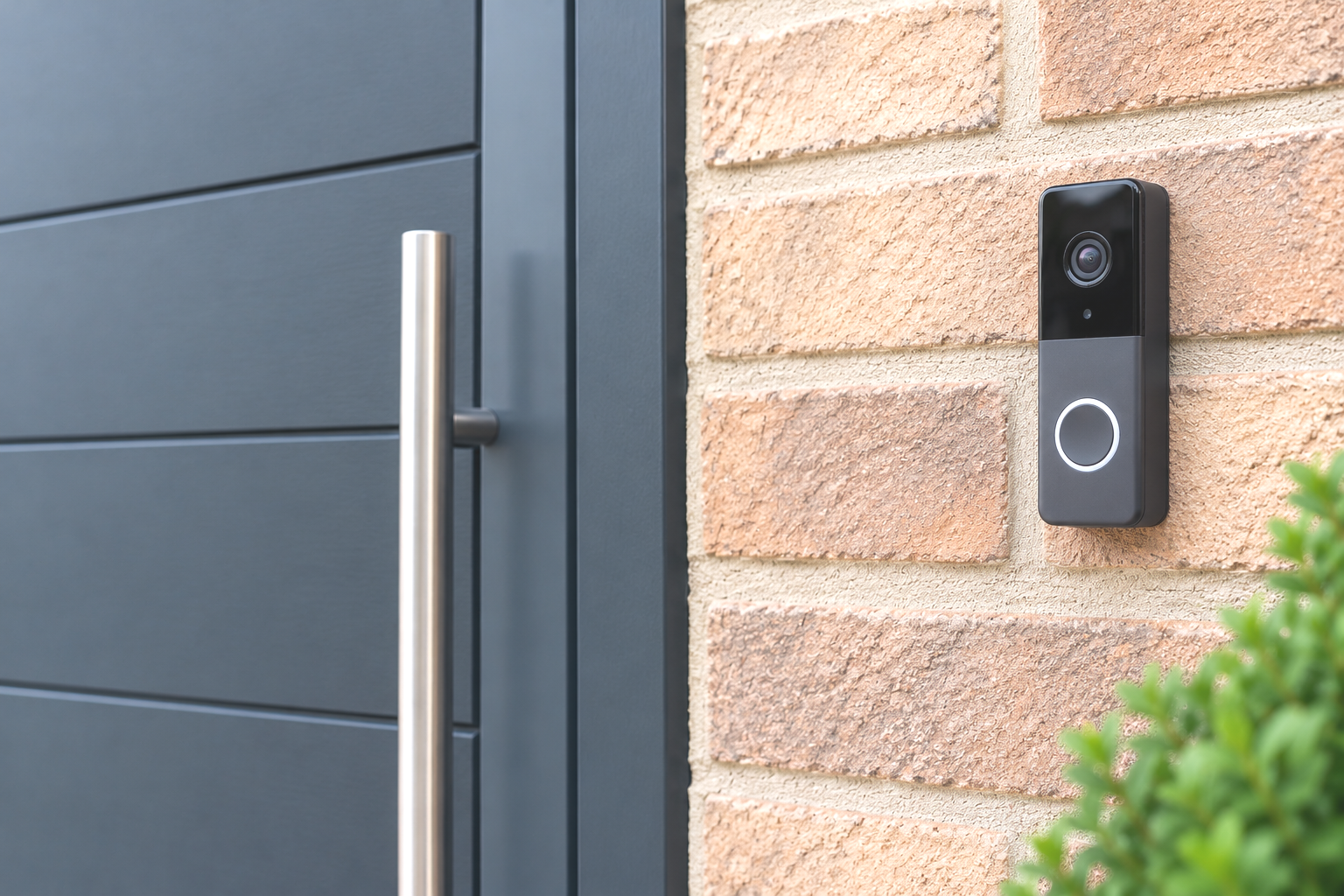
Video doorbells and wireless security cameras have become increasingly popular with homeowners looking for a convenient way to monitor their properties. With smartphone notifications, live video feeds and increasingly high-resolution cameras, it's easy to understand their appeal.
But is a video doorbell enough to protect your home, or is professionally installed CCTV still worth considering?
The answer depends on what you want your security system to achieve.
A video doorbell can be useful for checking visitors and monitoring activity around your front entrance. However, monitoring your doorstep is not necessarily the same as protecting your entire property.
There are also important differences in camera positioning, image quality, night vision, recording capabilities and reliability that aren't always obvious when comparing product specifications.
In this guide, Sleeptight Security explains the differences between video doorbells, DIY security cameras, professionally installed CCTV and intruder alarms, helping you understand which options may be suitable for your home.
Is a Video Doorbell Enough for Home Security?
A video doorbell can be an excellent starting point for home security.
Depending on the model, it may allow you to:
See and speak to visitors remotely.
Receive notifications when movement is detected.
Check deliveries and activity around your front door.
View live footage through a smartphone.
Access recorded footage, subject to the device's recording capabilities and any applicable subscription.
For smaller properties, particularly those with a single main entrance, this may provide much of the visibility a homeowner wants.
However, most video doorbells are designed primarily to monitor the area immediately surrounding the entrance.
They may not adequately cover side passages, rear gardens, garages, outbuildings or other potential access points.
The question isn't whether a video doorbell is useful. It's whether it provides the coverage and level of security your particular property requires.
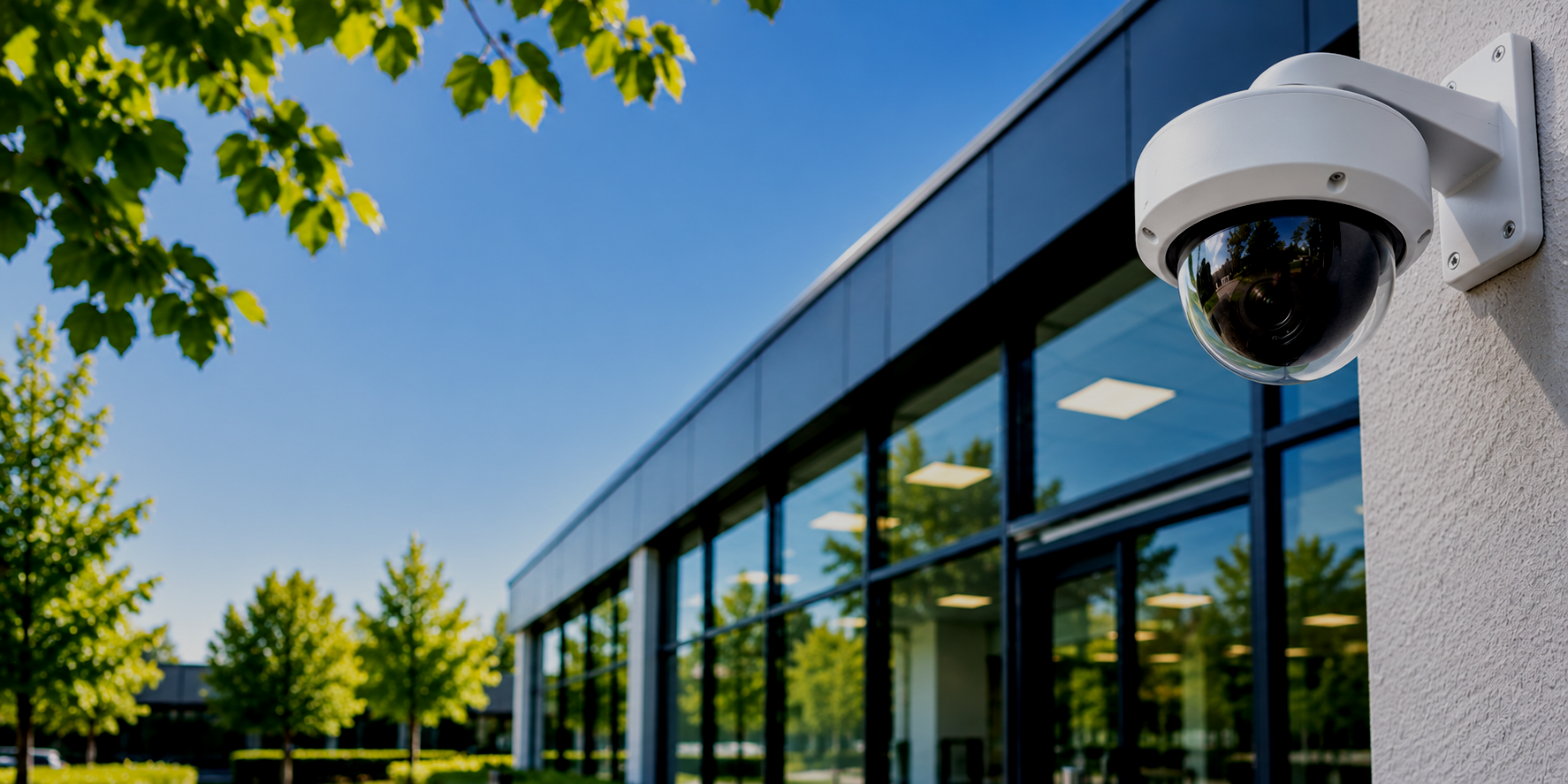
Video Doorbell vs CCTV: What's the Difference?
Both video doorbells and CCTV cameras can capture video footage, but their intended uses and capabilities can differ considerably.
A video doorbell is generally designed around a fixed location: your front entrance.
A CCTV system can incorporate several cameras positioned around a property to monitor different areas. These might include driveways, entrances, side access routes, gardens and outbuildings.
Professionally installed CCTV can also offer more flexibility in camera selection, lens choice, recording equipment and system configuration.
For example, a camera intended to monitor a wide garden may need different characteristics from one designed to capture detailed footage at a narrow entrance.
A properly designed CCTV system considers these differences before equipment is selected.
| Feature | Video Doorbell | Professionally Installed CCTV |
|---|---|---|
| Main Purpose | Front-door monitoring and communication | Wider property surveillance |
| Camera Positioning | Usually fixed at the entrance | Designed around areas requiring coverage |
| Image Resolution | Varies by model | Wide choice of camera specifications |
| Night Vision | Depends on camera and lighting conditions | Cameras can be selected for specific lighting conditions |
| Recording | Often event-based; depends on model | Continuous, scheduled or event-based options |
| Storage | Often cloud-based | Local, network or cloud options |
| Property Coverage | Primarily the front entrance | Multiple areas can be monitored |
| Internet Dependency | Often required for remote features | Some systems record locally without internet access |
| Intruder Detection | Usually motion notifications | Video analytics may be available; dedicated alarms remain separate |
Important: Features vary by product, configuration and installation. Professionally installed CCTV does not automatically offer every feature listed. Swipe horizontally to view the full table on mobile.
Is 4K CCTV Better Than 1080p? Why Resolution Isn't Everything
One of the biggest misconceptions about security cameras is that a higher resolution automatically means better security.
You may see cameras advertised as 1080p, 2K or 4K, with the assumption that the highest number must produce the best results.
Higher resolution can provide more image detail, but resolution alone doesn't determine whether footage will be useful.
Other factors include:
Camera sensor quality.
Lens selection and field of view.
Distance between the camera and the subject.
Available lighting.
Video compression and recording settings.
Camera positioning and viewing angle.
Movement and exposure settings.
For example, a high-resolution camera positioned too far away from a driveway may record an excellent overview of the area but still struggle to capture useful facial detail.
A lower-resolution camera positioned appropriately, with a suitable lens and good lighting, may produce more useful footage for a particular purpose.
Why Camera Positioning Matters as Much as Resolution
Imagine two cameras monitoring the same driveway.
One is mounted high on the house with a very wide viewing angle. It captures the driveway, front garden and surrounding area.
The second is positioned to concentrate on a narrower area near the entrance.
The first camera may provide better overall coverage, while the second may capture more useful detail of someone approaching.
Neither camera is necessarily wrong. They simply perform different jobs.
This is why professional CCTV design begins by considering what you need to see, where you need to see it and how much detail is required.
Why Is My Security Camera Blurry at Night?
Night-time image quality is another important consideration when comparing DIY security cameras with professionally installed CCTV.
A camera may produce excellent images during daylight but struggle when lighting conditions change.
Common causes of poor night-time footage include:
Insufficient ambient lighting.
Infrared reflections from nearby walls or surfaces.
Bright security lights causing overexposure.
Movement appearing blurred in low light.
Camera sensors struggling to capture sufficient detail.
Dirty lenses or poorly positioned equipment.
Some cameras use infrared illumination to capture images in darkness, while others are designed to make better use of available light.
However, the presence of infrared or advertised colour night vision doesn't guarantee clear footage in every environment.
Does Professional CCTV Have Better Night Vision?
Not automatically.
Some consumer security cameras offer very good low-light performance, while a poorly selected professional camera can still produce disappointing results.
The difference is that a professional installer can assess the property's lighting conditions and select suitable equipment for the intended location.
For example, a camera covering an unlit side passage may require a different solution from one monitoring a driveway illuminated by external lighting.
Correct positioning, appropriate equipment and suitable lighting can all contribute to better results.
Wired vs Wireless CCTV: Which Is More Reliable for Home Security?
Wireless security cameras are popular because they're convenient and can often be installed without extensive cabling.
However, it's important to understand that wireless doesn't necessarily mean completely cable-free.
Some wireless cameras use Wi-Fi for communication but still require a mains power supply. Others operate using rechargeable batteries.
Both approaches have advantages and limitations.
Wireless and Battery-Powered Cameras
Wireless cameras may be suitable for homeowners who want a flexible installation with minimal disruption.
However, performance can depend on:
Wi-Fi signal strength and stability.
Battery condition and charging frequency.
Camera placement.
Internet connectivity for cloud-based features.
Recording settings and power-saving behaviour.
Some battery-powered cameras use motion-triggered recording rather than continuous recording to conserve power.
This may be entirely suitable for their intended purpose, but homeowners should understand how and when footage is captured.
Wired CCTV and Power over Ethernet (PoE)
Many professionally installed IP CCTV systems use Power over Ethernet, commonly called PoE.
This allows compatible cameras to receive both power and data through a network cable.
Potential advantages include stable wired connectivity, centralised recording and reduced reliance on Wi-Fi signal quality.
However, wired systems still need appropriate power supplies, networking and maintenance.
Neither wired nor wireless CCTV is automatically the right choice. The decision should reflect the property's layout, installation requirements and the importance of reliable recording.
Can DIY Security Cameras Record Continuously?
Some can, but not all.
Many consumer security cameras rely on motion-triggered recording, while others support continuous recording when connected to compatible power supplies or recording equipment.
This distinction matters because motion detection systems may not capture every moment of an incident.
Depending on the equipment and configuration, a camera might begin recording only after movement is detected.
A professionally configured CCTV system can offer options such as continuous recording, scheduled recording and motion-triggered recording.
It's also worth considering how long recordings are retained and how easily they can be retrieved.
Cloud Storage vs Local CCTV Recording
Cloud storage can provide convenient remote access to footage, but may depend on internet connectivity, subscriptions and the provider's service.
Local recording systems, such as a compatible network video recorder (NVR), can store footage on equipment installed at the property.
Some systems combine local recording with remote viewing.
The important questions are whether footage is recorded when required, stored securely, retained for an appropriate period and accessible when needed.
DIY vs Professionally Installed CCTV: Is It Worth Paying for Installation?
DIY security cameras can be a practical and affordable option, particularly for smaller properties or homeowners who only want to monitor one or two locations.
Modern consumer products can offer good image quality, convenient smartphone access and useful security features.
However, choosing individual cameras is different from designing a coordinated security system.
What Does a Professional CCTV Installer Actually Do?
Professional CCTV installation involves more than attaching cameras to a wall.
Depending on the project, it can include:
Assessing the property's layout and potential vulnerabilities.
Identifying areas requiring surveillance.
Selecting suitable camera types and lenses.
Planning camera positions and viewing angles.
Considering daylight and night-time performance.
Installing appropriate cabling and recording equipment.
Configuring recording, storage and remote access.
Testing the system under realistic conditions.
Explaining how to operate and maintain the equipment.
For example, installing several cameras without considering their fields of view can leave unexpected blind spots.
Similarly, placing cameras too high, too far away or facing strong light sources can affect the usefulness of recorded footage.
The objective is not simply to install more cameras, but to create a system that provides appropriate coverage and usable images.
Do I Need a Burglar Alarm If I Already Have CCTV?
This is another common question, and one of the most important distinctions in home security.
CCTV and intruder alarms perform different functions.
CCTV is primarily used to observe and record activity. Some systems can also provide intelligent detection and notifications.
An intruder alarm is specifically designed to detect potential unauthorised entry or movement within protected areas and raise an alert.
Depending on the system, an intruder alarm may include:
Door and window contacts.
Passive infrared (PIR) movement detectors.
External or internal sounders.
Keypads and control panels.
Smartphone notifications.
Monitoring options, where available.
A camera may notify you that movement has occurred near your driveway, but that is not necessarily equivalent to a dedicated intruder alarm detecting a potential break-in.
Is It Better to Have CCTV and an Intruder Alarm Together?
For some properties, combining CCTV and an intruder alarm provides a more comprehensive approach.
CCTV can help homeowners see what is happening around their property and review recorded events.
An intruder alarm can provide dedicated detection and alerting when protected areas are breached.
These systems can complement one another, although they don't have to be installed together.
The appropriate level of protection depends on the property, the homeowner's concerns and their budget.
Where Should CCTV Cameras Be Positioned Around a House?
Camera positioning should be based on the areas that genuinely need monitoring rather than simply installing cameras wherever it's easiest.
Depending on the property, important locations might include:
Front entrances and driveways.
Side passages and access routes.
Rear doors and garden entrances.
Garages and outbuildings.
Areas containing valuable equipment.
A good installation also considers camera height, lighting, obstructions, privacy and the level of detail required.
For example, a wide-angle camera may be useful for monitoring a garden, but a different camera position or lens may be needed to capture more detailed footage at an entrance.
Camera positioning should also respect neighbouring properties and public spaces.
In the UK, data protection requirements may apply where domestic CCTV captures people beyond the boundaries of your private property. Homeowners should consider appropriate positioning, privacy masking, signage and responsible management of recordings.
When Should You Consider Professionally Installed Home Security?
Not every property requires a multi-camera CCTV system or a comprehensive intruder alarm installation.
For some homeowners, a video doorbell and a small number of DIY cameras may provide sufficient reassurance.
However, professional advice may be particularly worthwhile if:
Your property has several entrances or access routes.
You have a long driveway or large garden.
You want to monitor garages, workshops or outbuildings.
Existing cameras leave significant blind spots.
Night-time footage is unclear or unreliable.
You want continuous recording or centralised storage.
Your Wi-Fi coverage is inconsistent.
You want CCTV and an intruder alarm to provide complementary protection.
You're upgrading an older security system.
The most important starting point is understanding what you want your security system to achieve.
Frequently Asked Questions About Video Doorbells, CCTV and Home Security
Do I need CCTV if I already have a video doorbell?
Not necessarily. A video doorbell may be sufficient if you only want to monitor your front entrance. However, CCTV may be worth considering if you need wider coverage of your driveway, garden, side entrances or outbuildings.
Is 4K CCTV always better than 1080p?
No. Although 4K cameras can capture more detail, image quality also depends on sensor performance, lighting, lens selection, camera positioning and recording settings. Higher resolution doesn't automatically guarantee more useful footage.
Are wireless CCTV cameras as reliable as wired cameras?
Wireless cameras can work very well, but their reliability depends on factors such as Wi-Fi coverage, power supply and system configuration. Wired cameras can provide more consistent network connectivity where suitable cabling is installed.
Can CCTV work without Wi-Fi or an internet connection?
Some CCTV systems can record locally without an active internet connection, provided they have the necessary power, cameras and recording equipment. Remote smartphone access and cloud-based features generally require connectivity.
Why is my CCTV footage blurry at night?
Poor night-time footage can result from insufficient lighting, unsuitable camera settings, movement, infrared reflections or camera positioning. A higher-resolution camera alone may not solve these problems.
Do I need a burglar alarm if I have security cameras?
It depends on your security requirements. Cameras provide surveillance and recording, while intruder alarms use dedicated detection devices to identify potential intrusion and raise an alert. The two can work together.
Is professional CCTV installation worth the cost?
Professional installation may be worthwhile where a property requires multiple cameras, carefully planned coverage, reliable recording or specialist equipment. For simpler requirements, DIY cameras may be adequate.
Can I install CCTV that records the pavement outside my house?
Domestic CCTV should be positioned to minimise unnecessary recording beyond your property. If it captures identifiable people in public areas, shared spaces or neighbouring properties, UK data protection requirements may apply. Homeowners should follow current Information Commissioner's Office guidance.