
How intelligent CCTV detection is changing home and business security
How intelligent CCTV technology is changing home and business security
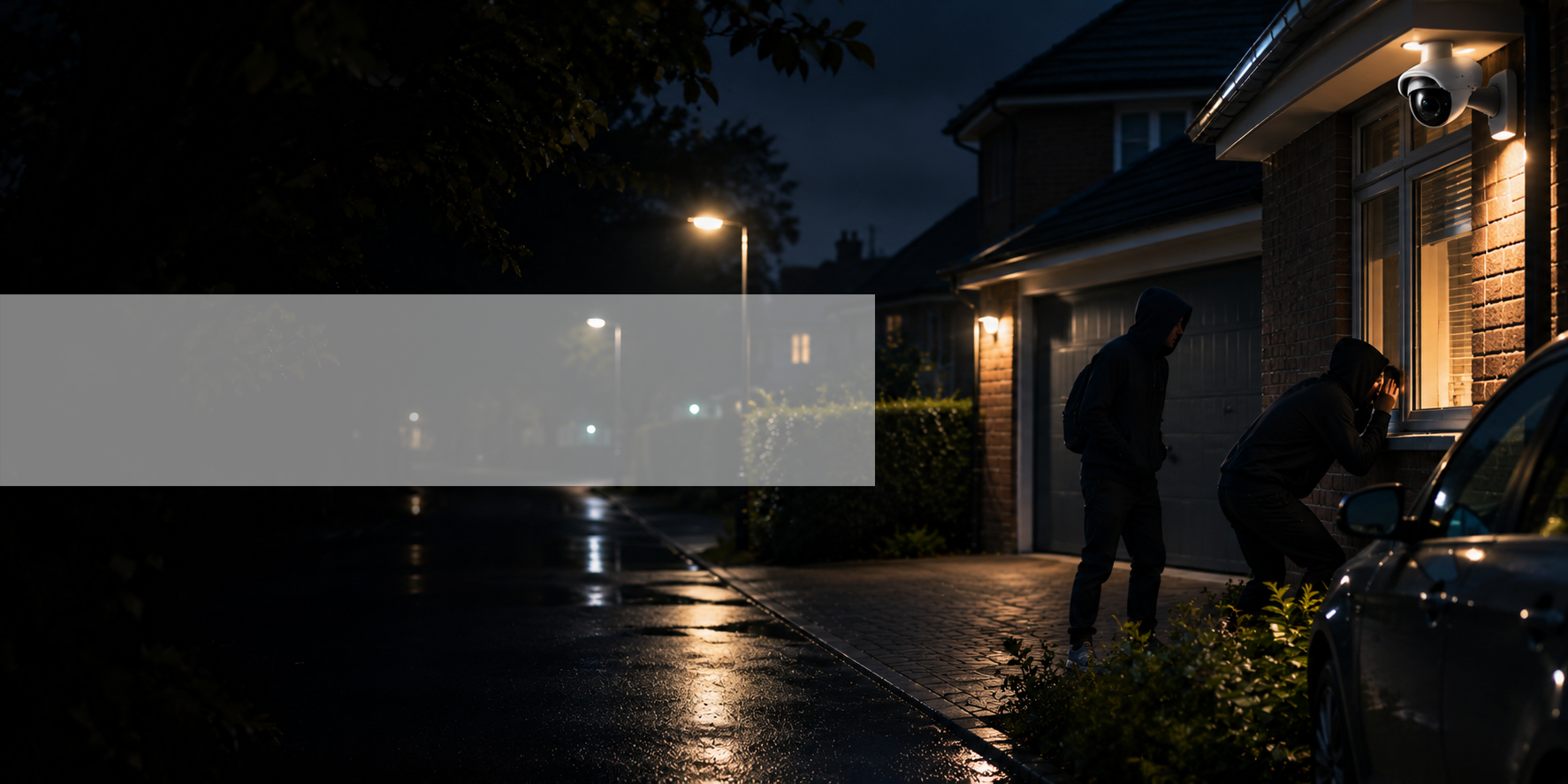
CCTV technology has come a long way from simply recording footage for someone to review after an incident. Modern AI CCTV cameras can recognise certain types of activity, distinguish between people and vehicles, and provide more relevant notifications when something happens around your property.
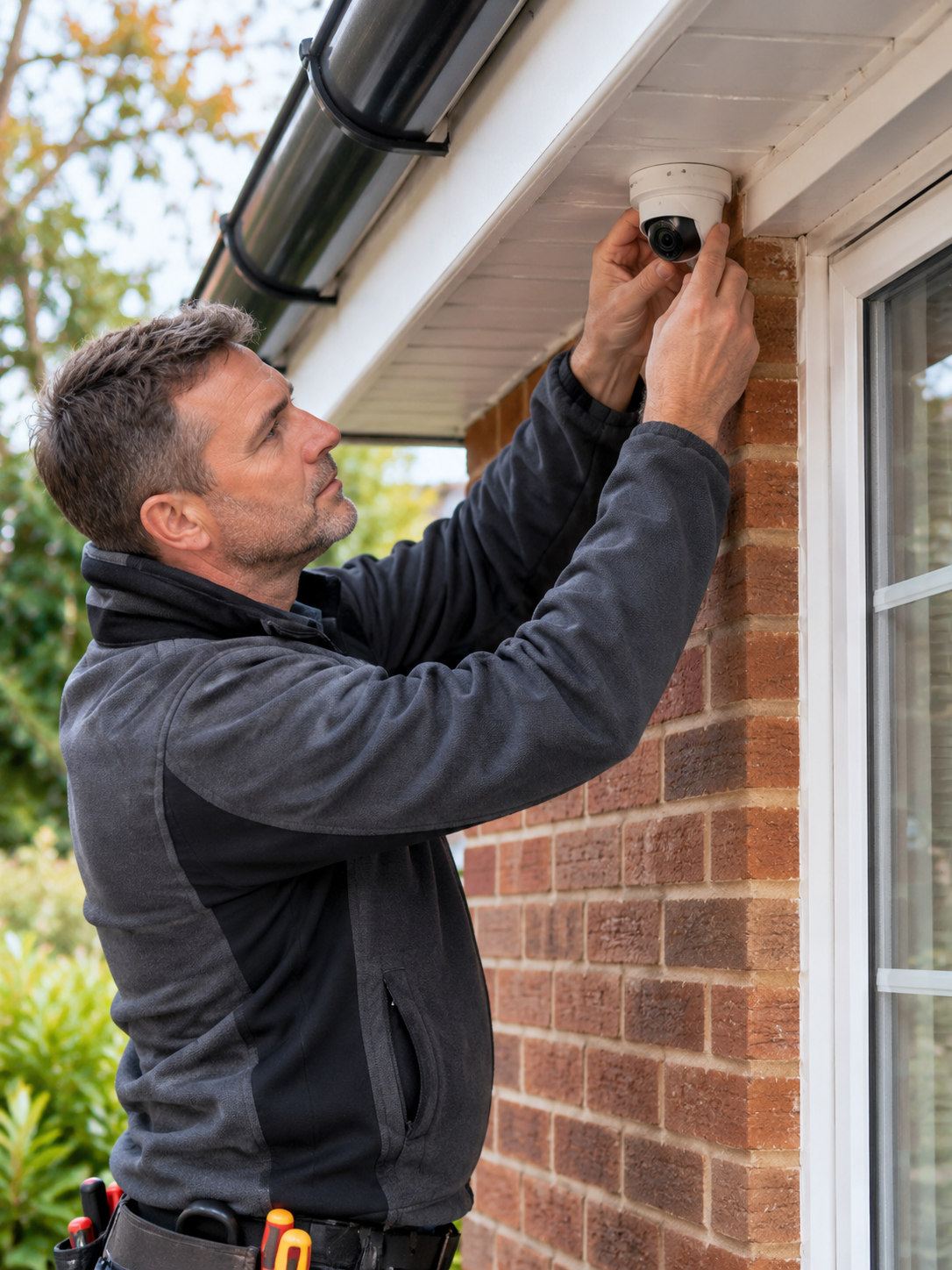
But does artificial intelligence actually make CCTV better? And if you already have security cameras installed, is it worth upgrading?
For homeowners and businesses considering AI-powered CCTV in the UK, understanding what the technology can and cannot do is essential.
What Is AI CCTV and How Does It Work?
AI CCTV uses intelligent software to analyse images captured by security cameras and identify particular objects, movements or events.
Traditional motion detection typically responds to changes within a camera's field of view. This might include someone walking past, a vehicle entering a driveway or even a tree moving in the wind.
AI-powered CCTV goes further by analysing what appears in the footage.
Depending on the system, intelligent detection may identify:
People entering a designated area
Vehicles approaching or leaving a property
Animals moving through a garden
Activity crossing a virtual boundary
Movement within restricted areas
Rather than receiving a notification every time something moves, you may be able to configure your CCTV to alert you only when particular activity occurs.
For example, a homeowner might want to know when someone enters their driveway, while a business may need an alert when a person enters a restricted area outside working hours.
However, AI detection is not infallible. Accuracy depends on the equipment, camera positioning, lighting and correct configuration.
AI CCTV vs Traditional CCTV: What's the Difference?
The main difference is not necessarily the quality of the picture, but how the system interprets what the camera sees. AI-powered CCTV can provide more advanced detection and alerts, although features vary between systems.
| Feature | Traditional CCTV | AI CCTV |
|---|---|---|
| Video Recording | Yes | Yes |
| Basic Motion Detection | Often available | Usually available |
| Person & Vehicle Recognition | Not always available | Available on many systems |
| Custom Detection Zones | Depends on equipment | Available on many systems |
| Intelligent Event Notifications | Limited or basic | More advanced options |
| Searching Recorded Footage | Often time-based | May support event-based searches |
| Night-Time Recording | Depends on camera | Depends on camera |
| False Alerts | Can occur frequently | May be reduced with suitable configuration |
Important: Features vary by manufacturer, model and system configuration. AI CCTV does not automatically provide better image quality or eliminate false alerts. Some existing CCTV systems can also support intelligent analytics through compatible recording equipment.
An important distinction is that modern CCTV systems may already include intelligent analytics. Upgrading doesn't always mean replacing every camera.
Can AI CCTV Tell the Difference Between People, Animals and Vehicles?
One of the most useful developments in CCTV technology is object classification.
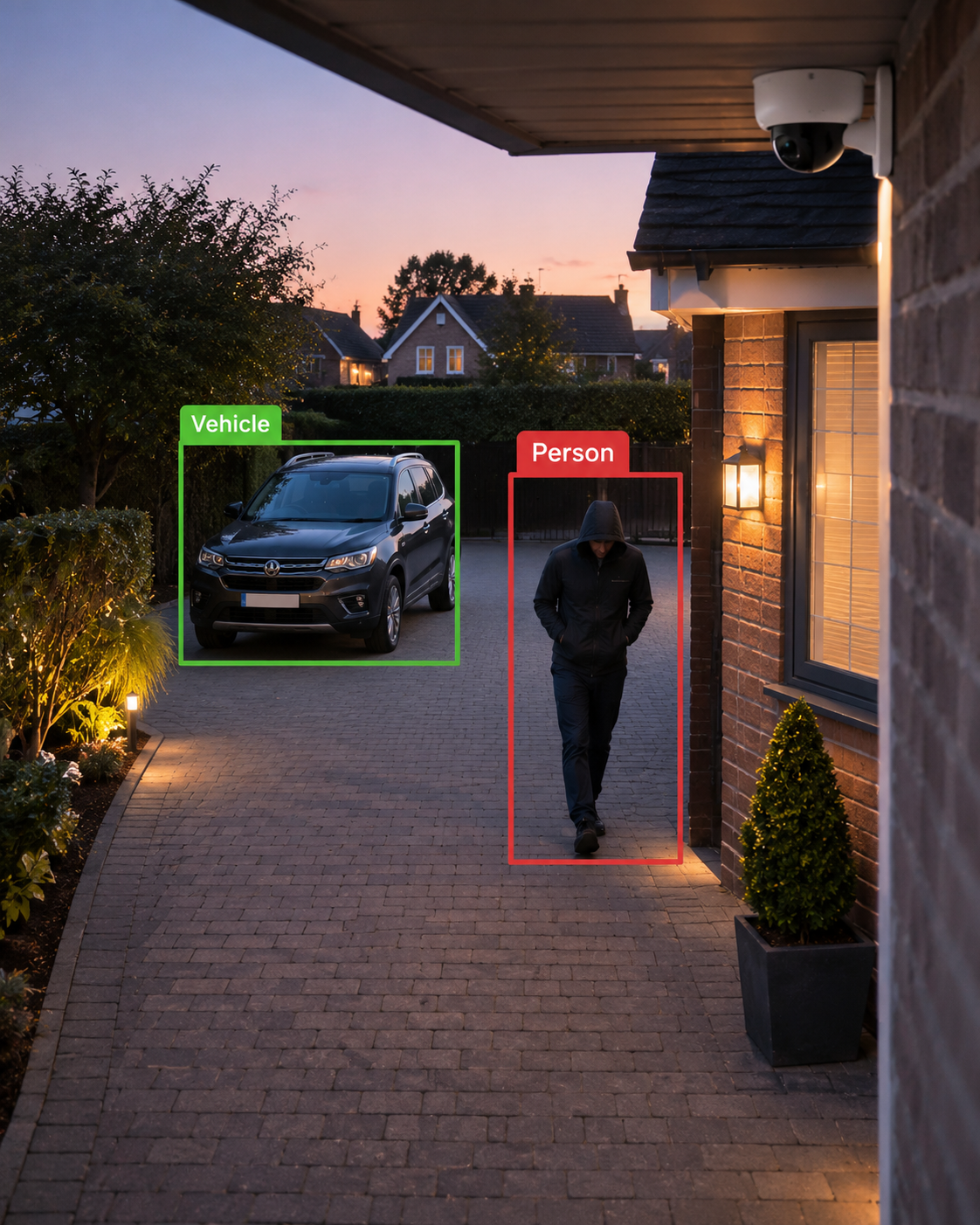
Imagine having a camera overlooking your driveway.
With basic motion detection, you might receive a notification whenever something moves across the picture. This could be a passing car, a cat or a branch moving in the wind.
With a suitably configured AI CCTV system, you may be able to receive notifications specifically when a person enters your driveway, rather than for every movement.
For example, you might configure your cameras to:
Notify you when a person approaches the front entrance.
Record when a vehicle enters a designated parking area.
Ignore certain movements in the garden.
Alert you if someone crosses a defined boundary outside normal operating hours.
This can make notifications more relevant and reduce the time spent reviewing unimportant footage.
However, AI detection isn't infallible. Poor lighting, unusual camera angles, obstructions, weather and distance can affect how accurately objects are identified.
A system should be tested and adjusted after installation rather than assuming its default settings will be suitable.
Can AI CCTV Reduce False Alarms?
Potentially, yes.
One of the frustrations with conventional motion-activated security cameras is receiving frequent notifications about events that don't require attention.
Examples include moving vegetation, changes in lighting, insects near the lens or passing traffic.
AI-based detection can help reduce some of these unwanted alerts by filtering events according to recognised objects or predefined rules.
For instance, a business might want to receive alerts when someone enters a restricted loading area outside working hours, rather than whenever shadows or vegetation move.
But intelligent detection cannot eliminate false alarms entirely.
The effectiveness of the system still depends on:
Correct camera positioning
Suitable lighting
Appropriate detection sensitivity
Carefully defined detection zones
Regular maintenance and cleaning
Testing under different conditions
A professionally designed system should consider these factors before relying on intelligent alerts.
Is AI CCTV Better at Night?
Not automatically.
AI software analyses the images provided by the camera. If those images are poor quality, intelligent detection may also be less reliable.
For example, a camera facing directly into vehicle headlights may struggle to capture useful details, regardless of whether it has AI features.
Night-time performance depends on several factors, including:
Camera sensor quality
Available ambient lighting
Infrared or supplementary illumination
Lens selection
Exposure settings
Camera positioning
Distance from the subject
Some systems offer advanced low-light imaging, but this is a camera capability rather than a guaranteed benefit of artificial intelligence.
A well-positioned conventional camera may capture more useful footage than a poorly positioned AI camera.
This is why choosing a CCTV system should involve more than comparing megapixels or marketing claims.
Can I Upgrade My Existing CCTV System to AI?
Possibly — and this is one of the most useful questions to ask before replacing existing equipment.
Some CCTV installations can gain intelligent detection features through a compatible network video recorder (NVR), software platform or additional video analytics equipment.
Other systems may require new cameras or a more substantial upgrade.
The answer depends on several factors.
1. Camera compatibility
Existing cameras need to provide a suitable video feed that the new recording or analytics equipment can process.
Compatibility between different manufacturers and systems should be checked rather than assumed.
2. Recording equipment
Some intelligent detection features are processed within the camera itself, while others are handled by the recorder or a separate processing device.
The available features may therefore depend on both the camera and the recording equipment.
3. Image quality
If your existing cameras produce poor footage, adding AI processing may not resolve the underlying problem.
An upgrade to camera positioning, lighting or image quality might be more beneficial.
4. Your security requirements
A homeowner wanting alerts when someone enters the driveway may need a different solution from a warehouse operator monitoring multiple access points.
Before replacing a complete system, it's worth having the existing equipment assessed.
AI CCTV for Homes: Is It Worth the Investment?
For homeowners, AI CCTV may be particularly useful where there are several areas to monitor.
Examples include:
Driveways and entrances: Intelligent detection can help distinguish between people and vehicles entering a designated area.
Gardens and outbuildings: Cameras may be configured to monitor particular access points while reducing unnecessary notifications from other parts of the garden.
Larger properties: Intelligent event searches can make it easier to locate relevant footage without reviewing hours of recordings.
Homes with existing CCTV: A compatible upgrade may improve the usefulness of an existing system without replacing every component.
However, not every home needs advanced analytics.
If you only want to check who is at the front door, a suitable video doorbell or conventional CCTV camera may meet your requirements.
The important question is whether the additional features solve a genuine problem.
Related reading: Do I Need CCTV If I Have a Video Doorbell? Understanding DIY vs Professional Home Security
AI CCTV for Businesses: Where Can It Be Useful?
Commercial premises often have different surveillance requirements from residential properties.
For businesses, AI CCTV may help staff identify relevant activity across larger sites or multiple cameras.
Potential applications include:
Offices and Commercial Buildings
Intelligent detection can help monitor designated entrances, external access points and areas that should not be accessed outside working hours.
Warehouses and Industrial Premises
AI-based alerts may help identify people or vehicles entering specified yards, loading areas or restricted zones.
Shops and Retail Premises
CCTV analytics can support the review of relevant events, although camera positioning and privacy requirements remain important.
Schools and Educational Premises
Appropriately selected analytics may assist with monitoring designated entrances or perimeter areas.
However, surveillance involving children requires particular care, including consideration of safeguarding, privacy, necessity and proportionality.
AI CCTV should support an organisation's wider security arrangements, not replace suitable access control, intruder alarms or established procedures.
Does AI CCTV Need Wi-Fi or an Internet Connection?
Not necessarily.
Some AI CCTV systems process video locally, either within the camera, recorder or another device connected to the property's network.
These systems may continue recording and performing certain detection functions without an active internet connection, provided they have suitable power and local connectivity.
However, features such as remote smartphone notifications, cloud storage and off-site access may require an internet connection.
The distinction between local recording, local AI processing and remote access is important when choosing a system.
For businesses requiring dependable operation, network resilience, power arrangements and recording continuity should all be considered.
Does AI CCTV Include Facial Recognition?
Not necessarily, and the two technologies should not be confused.
A camera that recognises the presence of a person is not necessarily identifying who that person is.
Person detection typically classifies an object in the image as a person.
Facial recognition involves analysing facial characteristics to recognise or identify individuals and can introduce significantly more complex privacy and data protection considerations.
For most ordinary domestic CCTV applications, facial recognition is not required to benefit from intelligent person detection.
Businesses considering more intrusive surveillance technologies should assess their legal obligations carefully.
AI CCTV and GDPR: What Do UK Property Owners Need to Know?
Intelligent CCTV still needs to be used responsibly.
For domestic properties, data protection obligations may apply when cameras capture identifiable people beyond the boundaries of the private property, including neighbouring gardens, shared areas or public pavements.
Homeowners should consider camera positioning, privacy masking, recording arrangements and whether the surveillance is necessary.
For businesses, CCTV use generally involves obligations under UK data protection law, including appropriate signage, lawful processing, secure storage and suitable retention arrangements.
AI-based analytics may introduce additional considerations, particularly where the system processes more sensitive information or monitors individuals in more intrusive ways.
Businesses should consider whether a data protection impact assessment is required and ensure their use of intelligent surveillance is necessary and proportionate.
Useful official guidance:
Is Professional AI CCTV Installation Worth It?
AI features can be useful, but their effectiveness depends on how the system is designed and configured.
Professional CCTV installation can help address important considerations such as:
Identifying the areas that genuinely require surveillance
Selecting cameras with suitable image quality and viewing angles
Positioning cameras to reduce blind spots
Assessing lighting and night-time performance
Configuring intelligent detection zones
Checking recording and storage requirements
Establishing suitable network and remote access arrangements
Considering privacy and data protection requirements
Testing the system under realistic conditions
This is particularly relevant when upgrading an existing CCTV system.
An assessment may reveal that the most effective improvement is not necessarily the addition of AI, but better camera positioning, improved lighting or more reliable recording equipment.
When Should You Consider Upgrading Your CCTV?
It may be worth reviewing your existing CCTV system if:
You receive frequent, irrelevant motion notifications.
Finding particular incidents in recorded footage takes too long.
Your cameras don't provide sufficient coverage of important areas.
Night-time image quality is poor.
Your recording equipment is outdated or unreliable.
Your property or business security requirements have changed.
You want to explore intelligent detection without replacing the entire installation.
An upgrade should be based on the performance of your current system and what you want to achieve.
Frequently Asked Questions About AI CCTV
Is AI CCTV better than normal CCTV?
AI CCTV can provide more advanced detection, notifications and footage-searching capabilities. However, it does not automatically offer better image quality or more reliable recording. The benefits depend on the equipment, camera positioning and system configuration.
Can AI CCTV tell the difference between people and animals?
Some AI CCTV systems can distinguish between people, animals and vehicles. This can help reduce unnecessary motion notifications. However, supported detection categories and accuracy vary between systems, particularly in poor lighting or difficult weather conditions.
Can I add AI to my existing CCTV system?
Potentially. Some existing CCTV cameras can work with compatible intelligent recording equipment or video analytics software. Other installations may require replacement cameras or recording equipment. A system assessment can help identify the available options.
Does AI CCTV work without the internet?
Some AI CCTV systems can record and process intelligent detection locally without an active internet connection. However, remote smartphone notifications, cloud storage and off-site viewing may require internet access. The exact capabilities depend on the equipment and configuration.
Does AI CCTV reduce false alarms?
AI detection can reduce some unwanted notifications by distinguishing between different types of movement and objects. However, false detections are still possible, and suitable camera positioning, detection zones and sensitivity settings remain important.
Is AI CCTV worth upgrading to?
It depends on your existing system, property layout and security requirements. If intelligent alerts or easier footage searches would solve an ongoing problem, upgrading may be worthwhile. If your current CCTV already meets your needs, additional AI features may offer limited benefit.
Considering an AI CCTV Upgrade for Your Home or Business?
Whether you're installing CCTV for the first time or reviewing an existing security system, choosing the right equipment is only part of the process.
Sleeptight Security provides CCTV installation, upgrades, maintenance and fault-finding for domestic and commercial properties across Surrey, Hampshire and surrounding areas.
We can discuss your current security arrangements, assess your requirements and advise on suitable CCTV solutions, including intelligent detection options where appropriate.
Not every property needs AI CCTV, and not every existing system needs replacing.
Our approach is to help you find a practical, reliable solution suited to your property.